Loren T. Atherley, PhD
Forensic and consulting criminologist: police, behavior, and public safety.
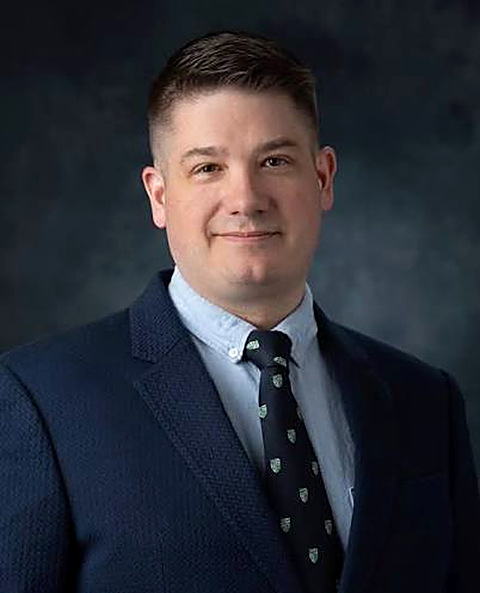
Dr. Loren T. Atherley is a forensic and consulting criminologist with nearly two decades of pracademic experience. As a senior advisor to the Chief of Police and the Mayor of the City of Seattle, he has an intimate knowledge of what it takes to deliver precision policing: to create and sustain public safety while minimizing the collateral harms that can accompany police service. With an extensive scholarship, and experience managing one of the most sophisticated evidence-based policing competencies in the field, Dr. Atherley has a proven record of providing research-quality analysis and expert opinion that helps juries and triers of fact understand complex subject matter.
Dr. Atherley holds a PhD from the Institute of Criminology at the University of Cambridge. A member in good standing of the American Society of Criminology and the American Society of Evidence-Based Policing, he has been honored as an inductee to the George Mason University Evidence-Based Policing Hall of Fame and is a National Institute of Justice Law Enforcement Advancing Data and Science (LEADS) Scholar, class of 2020. He sits on the executive board of the Caruth Police Institute, is a Senior Fellow at the Meadows Mental Health Policy Institute, and holds an appointment to the Department of Criminal Justice, Criminology and Forensics at Seattle University, where he has taught in the areas of serial murder, criminal profiling, and psychopathy.
Seattle, Washington
Four areas of engagement
Opinions are formed based on the evidence, accepted methods, and with a reasonable degree of scientific certainty, regardless of the retaining party.
-
Legal consulting
Expert witness testimony; non-testifying consultation to counsel and to retained experts; investigative support; forensic and threat assessment.
-
Government consulting
Advisory and analytic support to public agencies engaged in policing, oversight, and public safety operations.
-
Research consulting
Methodological and analytic support to investigators on grant-funded criminology and criminal justice research.
-
Advisory to industry
Technical and evidentiary review for organizations developing public safety technologies, and for their investors.
Education and appointments
- 2025PhD, CriminologyUniversity of Cambridge
- 2010MA, Criminal JusticeSeattle University
- 2007BA, Political ScienceSeattle University
- 2016–Adjunct Professor of Criminal JusticeSeattle University
- 2025–Executive Board MemberCaruth Police Institute
Awards and affiliations
- 2022 Evidence-Based Policing Hall of FameCenter for Evidence-Based Crime Policy, George Mason University · Nominated by Prof. Matthew Hickman, Seattle University
- 2020 LEADS ScholarLaw Enforcement Advancing Data and Science · National Institute of Justice, U.S. Department of Justice
Each award links to the issuing body
Professional associations
- American Society of Criminology
- Academy of Criminal Justice Sciences
- International Association of Chiefs of Police
- NIJ Law Enforcement Advancing Data and Science (LEADS)
- American Society of Evidence-Based Policing
- Society for Evidence Based Policing
- National Association of Professional Staff in Public Safety
- Alpha Phi Sigma
Selected peer-reviewed work
- Atherley, L. T. (2025). Risk managed demand: Operational risk management in police response to calls for service. Police Quarterly.
- Atherley, L. T. (2024). Intelligent risk management: Natural language processing real-time triage of police calls for service. Police Practice and Research, 1–19.
- Atherley, L. T., Hickman, M. J., Parkin, W. S., & Helfgott, J. B. (2022). Measurement of potential over- and under-policing in communities. Policing: A Journal of Policy and Practice, 16(3), 443–461.
- Hickman, M. J., Atherley, L. T., Lowery, P. G., & Alpert, G. P. (2015). Reliability of the force factor method in police use-of-force research. Police Quarterly.
- Atherley, L. T., & Hickman, M. J. (2014). Controlling use of force: Identifying police use of excessive force through analysis of administrative records. Policing, 8(2), 123–134.
- Atherley, L. T., & Hickman, M. J. (2013). Officer decertification and the national decertification index. Police Quarterly.
Beginning an engagement
Every engagement starts the same way, in all four practice areas: a short description of the matter, a conflicts check, then a scoping conversation. Rates are published in full.